Table Of Content
- How the Edith Farnsworth House Made Room for the Individual
- Drawings
- Types of Visual Art – A Look at Different Examples of Visual Arts
- Elements of Art – An Analysis of the Seven Art Elements
- Other structures
- Architecture as an expression of the times
- Why Is the Farnsworth House Considered a Modern Architectural Building?

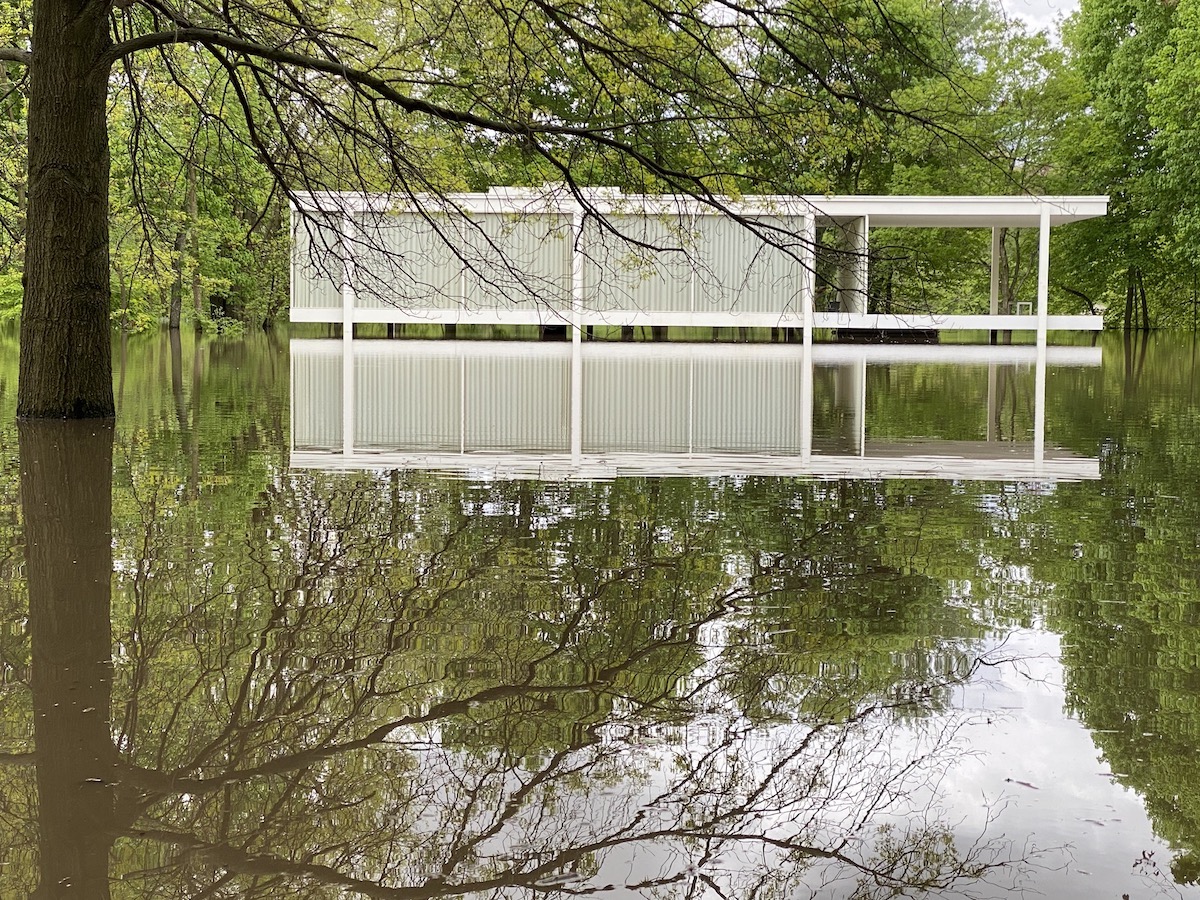
The house remains between the trees as if on tiptoe, without disturbing the grass’ growth, nor the regularity and volume of the river when it overflows. The manifest will to preserve the natural order of the place in every way and for the house to experience nature unaltered is plain to see. The house consists of a metal structure enclosed only by glass which creates the impression of a viewpoint, and pays tribute to the beauty of the space surrounding the house.
How the Edith Farnsworth House Made Room for the Individual
It is a less-is-more structure, and it stands as a subtly simple construction that served well as a location far from the hubbub of the industrialized world. He ultimately decided that it would be best to integrate the individual within this new modern age through the use of orderly designs. When it comes to the Farnsworth House, Ludwig Mies van der Rohe sought a means to produce the kind of residential structure that could coincide with the principles that he espoused in his work.
Drawings
The retreat was designated a National Historic Landmark in 2006, after being listed on the National Register of Historic Places in 2004.[5] The house is owned and operated as a house museum by the National Trust for Historic Preservation. After designing and building many ADUs, here are the most common reasons we’ve seen clients build an ADU. If you are interested in building an ADU on your property, click the Get Started button below. The home was lifted off the ground to accommodate for the potential flooding of the Fox River. Mies had contacted the Illinois State Water Survey to inquire about the highest flood stages of the area. They could not provide any historical data on water elevations, so Mies was forced to contact local farmers in the area and ask them to recall the highest flood elevations they remember seeing.
Types of Visual Art – A Look at Different Examples of Visual Arts
In 1972, Dr. Edith Farnsworth sold Farnsworth House to Baron Peter Palumbo, a British arts patron who had restored several other historic properties. When Palumbo listed the building for sale at Sotheby’s auction house in 2003, several potential buyers inquired about dismantling the structure and moving it to another state. The Edith Farnsworth House is located approximately 58 miles southwest of Chicago in Plano, Illinois along the Fox River.
Elements of Art – An Analysis of the Seven Art Elements
His work started in Germany, but he was forced to flee due to the Nazi Party, and he eventually moved to the United States to become both a teacher and a prolific architect. He would do this by aiming towards a form of simplicity in the structures that he designed. He would often label the buildings that he designed as a form of “skin and bones” architecture. This allows the Farnsworth House’s interior to remain open, and the use of a glass façade means that natural light easily flows into the structure. To add to that light, the white walls allow it to be further reflected and thereby add to the illumination of the building as a whole.
Other structures
Growing stormwater runoff from developed land has caused increasingly frequent severe flooding. A debate is currently underway about methods of protecting the house, including moving it to higher ground on the same property or outfitting it with a system to physically lift it higher in the event of a flood. Dr. Farnsworth enjoyed the house for several decades, until she lost a fight over an encroaching highway bridge. The home then came under the ownership of Peter Palumbo, a moneyed architecture aficionado who made the estate into a summer residence and sculpture garden beginning in 1972. In the actual construction, the aesthetic idea was progressively refined and developed through the choices of materials, colors, and details.
Farnsworth House Architecture - Enjoy Illinois
Farnsworth House Architecture.
Posted: Thu, 27 Sep 2018 07:00:00 GMT [source]
Arguably, she was the first to preserve a portion of the McCormick land holdings as a nature retreat, purchasing additional land in 1962, followed by the acquisition of the remaining McCormick lands by the State of Illinois during the late 1960s. Since the early nineteenth century land survey imposed boundaries that did not previously exist, National Trust staff continue to study our site history in larger physical and social contexts. The ground floor of the Farnsworth House is thereby elevated, and wide steps slowly transcend almost effortlessly off the ground, as if they were floating up to the entrance. Aside from walls in the center of the house enclosing bathrooms, the floor plan is completely open exploiting true minimalism. We specialize in custom luxury home builds that mirror each client's unique style.
Why Is the Farnsworth House Considered a Modern Architectural Building?
It’s one of the most significant of Mies van der Rohe’s works and among the world’s great architectural masterpieces. A founder and leader of the modernist movement in Europe, Mies lived and worked in Chicago for more than 30 years. He is well known for his use of glass and steel, as well as his sleek design aesthetic and the “less is more” philosophy that influenced city skylines around the world. Farnsworth House, the temple of domestic modernism designed by Mies van der Rohe as a weekend retreat for a Chicago doctor, is one of the most paradoxical houses of the 20th century. A perfectionist mirage, it floats like a pavilion in a park, but its history has been beset by plagues, floods and feuds. As the second installment of a series of three modernist classics presented by Archilogic, we’ve modeled the Farnsworth house so that you can see if—in spite of its austere reputation—it can be lived in after all.
Mies Van Der Rohe's Farnsworth House Is At Risk - Fast Company
Mies Van Der Rohe's Farnsworth House Is At Risk.
Posted: Tue, 29 Apr 2014 07:00:00 GMT [source]
In 2017, staff members at the Farnsworth house noticed a crack in one of the windows that could have been caused by corrosion. After close inspection, it was decided that the window had to be replaced as it posed a threat of damage to materials around it. The large windows open the house up entirely to nature outside, and vice versa, which was pivotal to Mies’ design ethos of blending the residence with its natural surroundings.
His idea for shading and privacy was through the many trees that were located on the private site. The Farnsworth House sits isolated on a floodplain that faces the Fox River, establishing the architect's concept of simple living. Open views from all sides of the building help enlarge the living space area and aid flow between the living space and its natural surroundings.
The exterior glazing and the intermittent partitions of the interior work together dialectically, shifting the viewer’s awareness between the thrill of exposure to the raw elements of nature and the comforting stability of architectonic enclosure. While Mies employed the same vocabulary—steel, large expanses of plate glass and stone—at Farnsworth as he did for his other projects of the time, the house conveys a much different feeling from his other work. Legendary architect Ludwig Mies van der Rohe instead floated a pristine glass box on a wooded river bank, with windows for walls and a space-age kitchen. His client wasn’t completely thrilled with the final design, but the result has become an iconic expression of the International Style. It is recognized as an iconic masterpiece of the International Style of architecture and has National Historic Landmark status.
But he believed the individual can and should live in harmony with the culture of one’s time for successful fulfillment. With the Farnsworth house constructed about 100 feet from the Fox River, Mies recognized the dangers of flooding. He designed the house at an elevation that he bellieved would protect it from the highest predicted floods, which are anticipated every hundred years. The Farnsworth House, built between 1945 and 1951 for Dr. Edith Farnsworth as a weekend retreat, is a platonic perfection of order gently placed in spontaneous nature in Plano, Illinois. Mies created a 1,500-square-foot (140 m2) structure that is widely recognized as an exemplar of International Style of architecture.
In this model you can explore the spatial arrangement of the house, and refurnish it with Eames chairs, deck it out with your IKEA favorites, or booby-trap it with children’s toys. After Dr. Farnsworth's retirement to Italy, the home was purchased by Lord Peter Palumbo, a British developer, art collector, and architecture connoisseur, who opened the house and property to limited public tours. In 2003, the National Trust and Landmarks Illinois acquired the property at auction through the generosity of several private donors, and the Edith Farnsworth House has been open as a public since 2004. Currently, one-third of annual visitors come from outside of the United States, including many architects and designers. Glass walls and open interior space are the features that create an intense connection with the outdoor environment while providing a framework that reduces opaque exterior walls to a minimum. The careful site design and integration of the external environment represent a concerted effort to achieve an architecture wedded to its natural context.
Mies accepted the problems of industrial society as facts to be dealt with and offered his idealized vision of how technology may be made beautiful and support the individual. He suggests that the downsides of technology decried by late-nineteenth-century critics such as John Ruskin can be solved with human creativity and shows us how in the architecture of this house. The Farnsworth House addresses fundamental issues about the relationship between the individual and his society. Mies viewed the technology-driven modern era in which an ordinary individual exists as primarily beyond one’s control.
He did not believe in the use of architecture for social engineering of human behavior, as many other modernists did, but his architecture does represent ideals and aspirations. His mature design work is a physical expression of his understanding of the modern epoch. He provides the occupants of his buildings with flexible and unobstructed space in which to fulfill themselves as individuals, despite their anonymous condition in the modern industrial culture. Mies accepted the problems of industrial society as facts to be dealt with, and offered his idealized vision of how technology may be made beautiful and support the individual as well.
However, seeing the building in person, experiencing the spaces, and closely observing the details gave me a new appreciation for this seminal work of architecture. Mies was also deeply aware of how industrial life cut off human beings from nature. He once said, “We should attempt to bring nature, houses, and the human being to a higher unity.” He certainly achieved that with the Edith Farnsworth House. The above photo of the exterior shows the trees surrounding the home reflecting in the glass. When the court case brought the house to broad public attention, critics of the International Style suggested a communist agenda by Mies and other modern architects. Edith Farnsworth commissioned Ludwig Mies van der Rohe to design and build the home on a flood plain in Plano, Illinois.


No comments:
Post a Comment